
Hi, I'm Ash, fellow senior. After a successful career, I postponed retirement to start Empathy, a brand dedicated to helping seniors and solo agers thrive. Ten Minute AI is my way of doing just that — showing you how to use AI with confidence, one simple 10-minute guide at a time.

What is AI?
I know it can feel like AI is just another confusing tech buzzword—something for the grandkids, not for us. But here's the honest truth: AI is just a tool that learns patterns to help with everyday tasks, like a very patient assistant that never gets tired of repeating itself.
For us, that means it can save time and reduce frustration in ways that matter. For example, I use it to draft letters to my insurance company, summarize those tiny prescription instructions, and even help me find the right words when I'm writing a birthday card to my grandson. It's like having a helpful neighbor next door who's always ready to lend a hand.
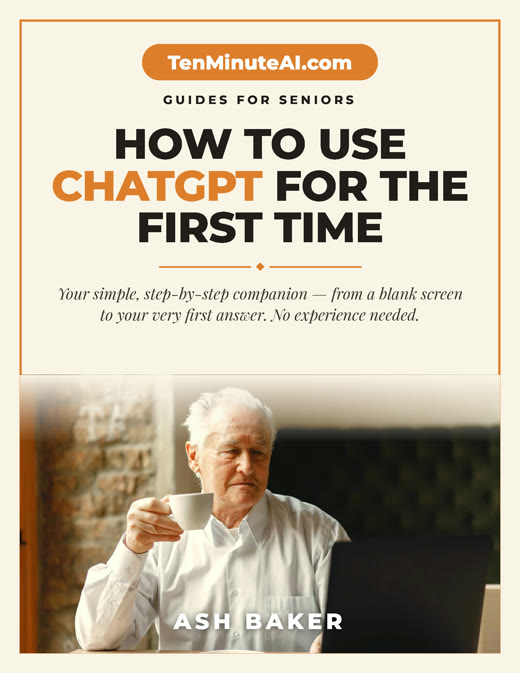
New to ChatGPT? Start here — free.
Get my large-print, step-by-step guide: How to Use ChatGPT for the First Time (PDF + short video). Yours free.
How AI Works Without the Jargon
Think of AI like a very observant friend who watches how you do things and then offers to help. If you always turn left at the grocery store to find milk, AI notices that pattern and can suggest the quickest route. It doesn't think or feel—it just recognizes patterns from lots of examples. That's why it can read your handwriting on a prescription bottle or suggest replies to emails. It's not magic; it's just a pattern-finder that's been trained on millions of examples, like how you learned to spot a four-leaf clover after seeing a few pictures.
A concrete example: I used to struggle with remembering the names of plants in my garden. Now I can take a photo with my phone, and AI tells me it's a rhododendron and even gives me care tips. It's like having a gardening encyclopedia that fits in your pocket.
Why It Matters for You—Right Now
AI can help with the little annoyances that add up. For instance, I used to spend ages sorting through paper bills. Now, I use a simple AI tool that reads the due dates and amounts from a photo of the bill and adds them to my calendar. No more late fees! And when my doctor hands me a lab report full of medical terms, I can paste it into a free AI tool and ask, 'Explain this like I'm 70 and not a doctor.' It gives me a clear summary I can actually understand.
Another big win: staying connected. I have a hard time typing on my phone, so I use voice-to-text (which is AI) to send messages to my daughter. I just talk, and it types for me. It's like having a secretary for your voice.
Getting Started Safely—Your First Step
You don't need to buy anything or learn coding. Start with something free and low-pressure. I recommend trying ChatGPT (at chat.openai.com) or Google's Gemini. Just type a question like, 'What's a simple recipe for chicken soup?' or 'Help me write a polite note to my neighbor about their noisy dog.' You'll see how it responds. Remember: never share personal info like your Social Security number or bank details. AI is like a helpful stranger—useful, but keep private things private.
Start with one small task this week. Ask AI to help you write a grocery list or explain a term from the news. If you get stuck, ask it to explain again—it won't get annoyed. That's the beauty of it: AI is always patient.
Ready to go further?