
Hi, I'm Ash, fellow senior. After a successful career, I postponed retirement to start Empathy, a brand dedicated to helping seniors and solo agers thrive. Ten Minute AI is my way of doing just that — showing you how to use AI with confidence, one simple 10-minute guide at a time.

Will AI Replace Me?
I hear a lot of folks asking, 'Will AI replace me?' The honest short answer is no—AI isn't here to take your place, but to help with the tedious stuff.
Think of it like a helpful assistant that can write a letter to your insurance company, remind you when to take your meds, or help you find a family recipe online without all the clutter. It's a tool, not a replacement.
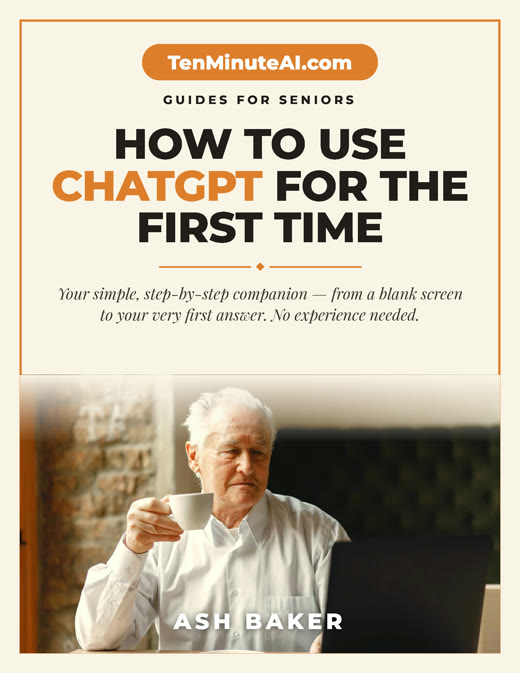
New to ChatGPT? Start here — free.
Get my large-print, step-by-step guide: How to Use ChatGPT for the First Time (PDF + short video). Yours free.
What AI Actually Does (and Doesn't Do)
AI is great at tasks like sorting information or generating text, but it can't feel your joy when a grandchild visits or understand the story behind that old photograph. For example, I use AI to draft a polite note to my doctor about a prescription refill—then I add my own personal touch before sending. It saves me time, but the care and relationship are still mine.
Everyday Ways AI Can Help You
Imagine you need to organize your digital photos. AI can group them by date or even by who's in them—like your granddaughter's birthday party. Or say you're trying to compare Medicare plans online; AI can summarize the key differences. It's like having a patient friend who doesn't get tired of repeating itself.
Getting Started Safely
Start small and low-stakes. Try asking a free AI like ChatGPT to 'explain how to change a lightbulb in simple steps' or 'write a thank-you note for a birthday gift.' You stay in control—you read it, you decide if it's right. No personal info needed. The more you practice, the more you'll see it's just another helpful tool, like a calculator or a microwave.
Ready to go further?